
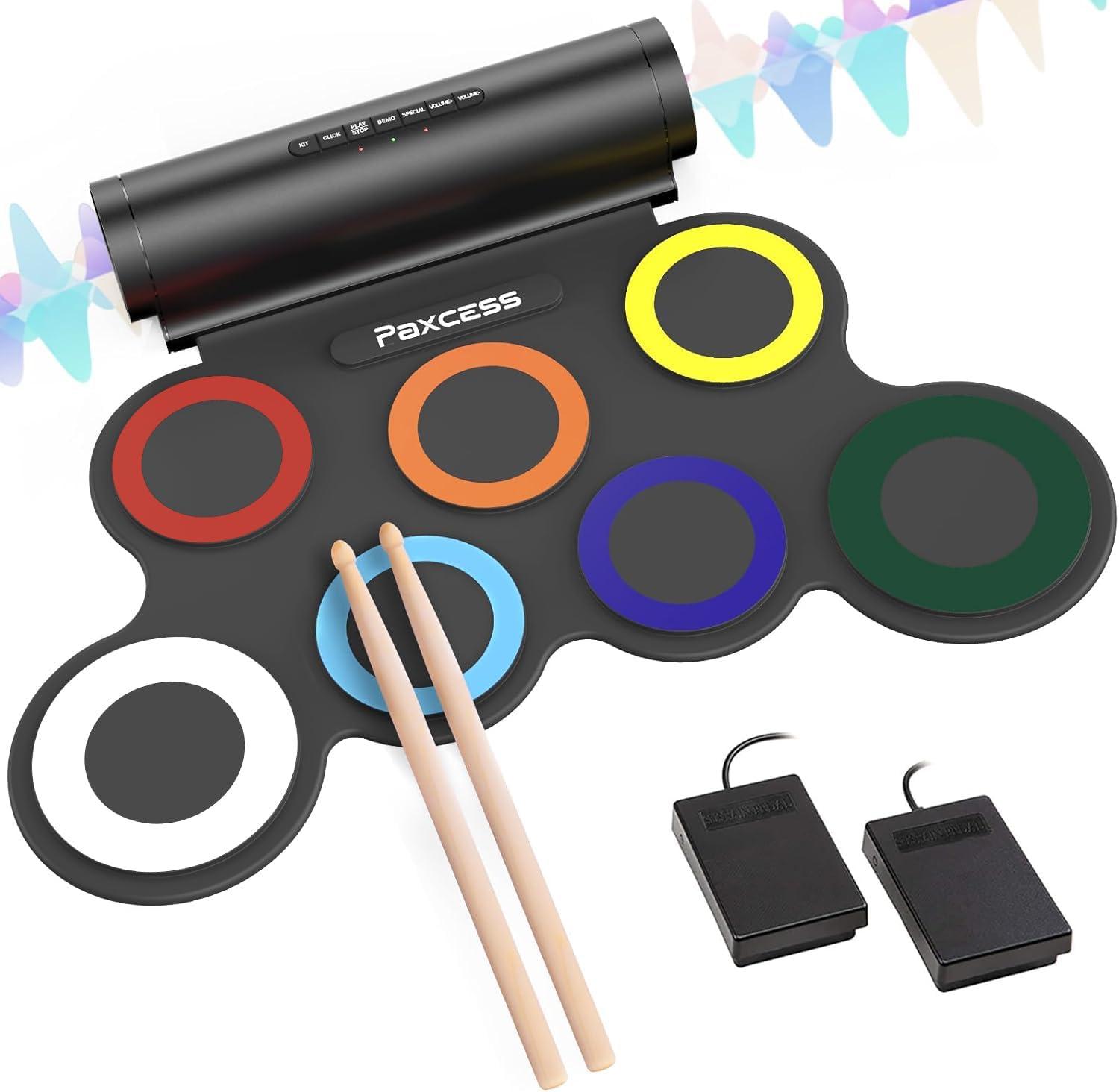
There’s something disarmingly satisfying about unrolling a drum kit from a backpack and having a full practice setup ready in minutes. That’s exactly the first impression the PAXCESS 1 Electronic drum Set (G3066LC) gave us: compact, surprisingly complete, and built for movement. Over the past few days we carried it between the living room, a park bench, and our home office, testing how well this 7‑pad roll-up kit balances portability with playability.
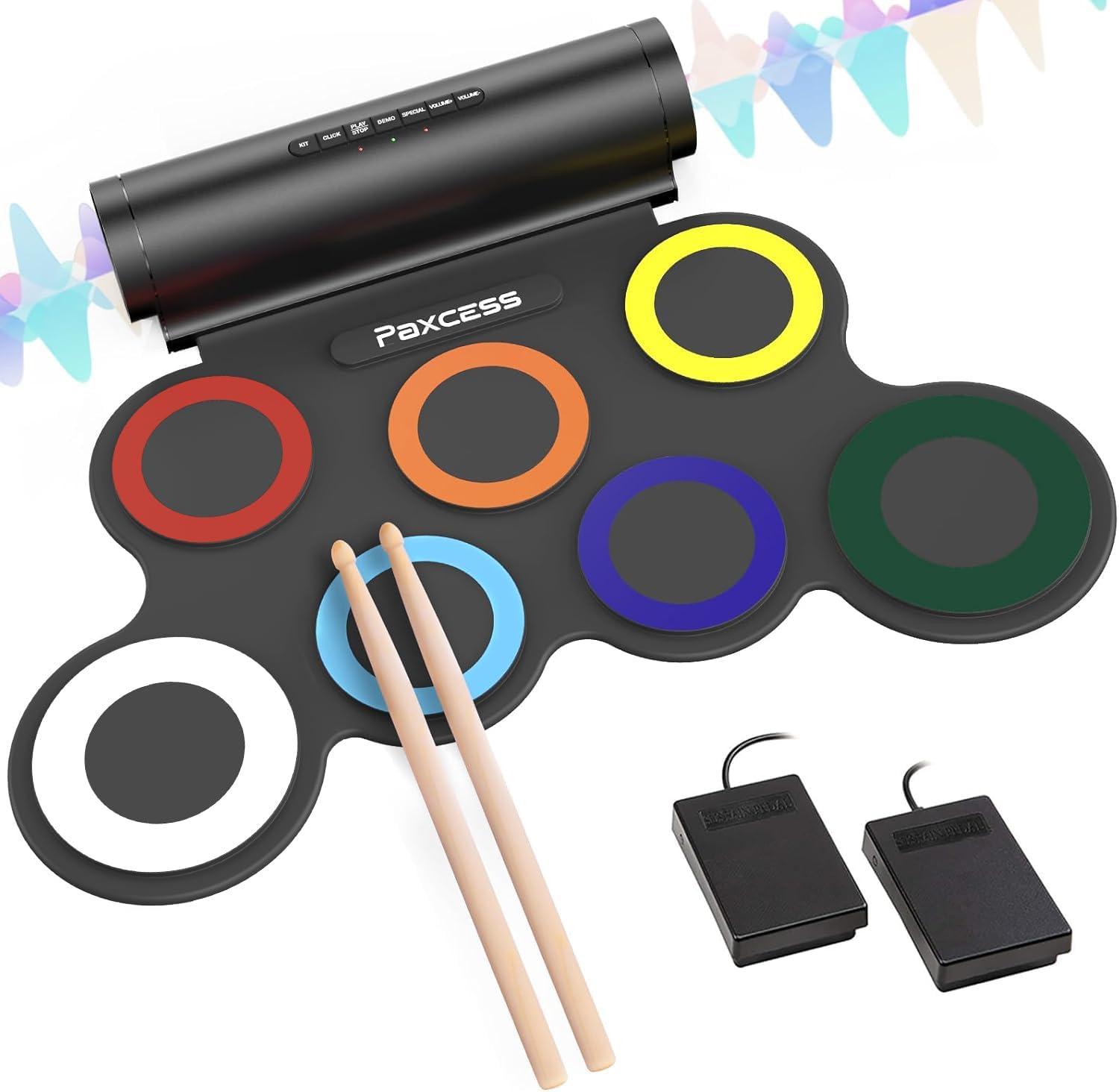
Out of the soft case we found a sensible layout – snare,three toms,hi‑hat,crash,ride and two foot pedals that mimic a bass drum – plus a compact control module. The built‑in dual speakers and ten volume levels mean you can play without extra gear, yet there’s also a headphone jack for stealthy late‑night practice and both USB MIDI and 5‑pin MIDI out for connecting to a computer or phone (phone may need an adapter) for production work or rhythm games like DTX Mania. PAXCESS backs the portability promise with a 2000mAh rechargeable battery rated up to 10 hours, and in everyday use it felt freeing to play without cords tethering us to an outlet.
In this review we’ll walk through how it feels to play,how the onboard sounds and demo songs hold up,how useful the MIDI connectivity is for producing or gaming,and whether the small footprint and battery life genuinely make it a practical kit for kids,commuters,or casual gigging drummers. We’ll also point out where compromises show - after all, a roll‑up kit won’t replace a full electronic kit in a studio – so you can decide if this is the travel‑ready, budget‑kind drum companion you’ve been looking for.
Our Overview of the PAXCESS one Electronic Drum Set and How It fits Our Needs
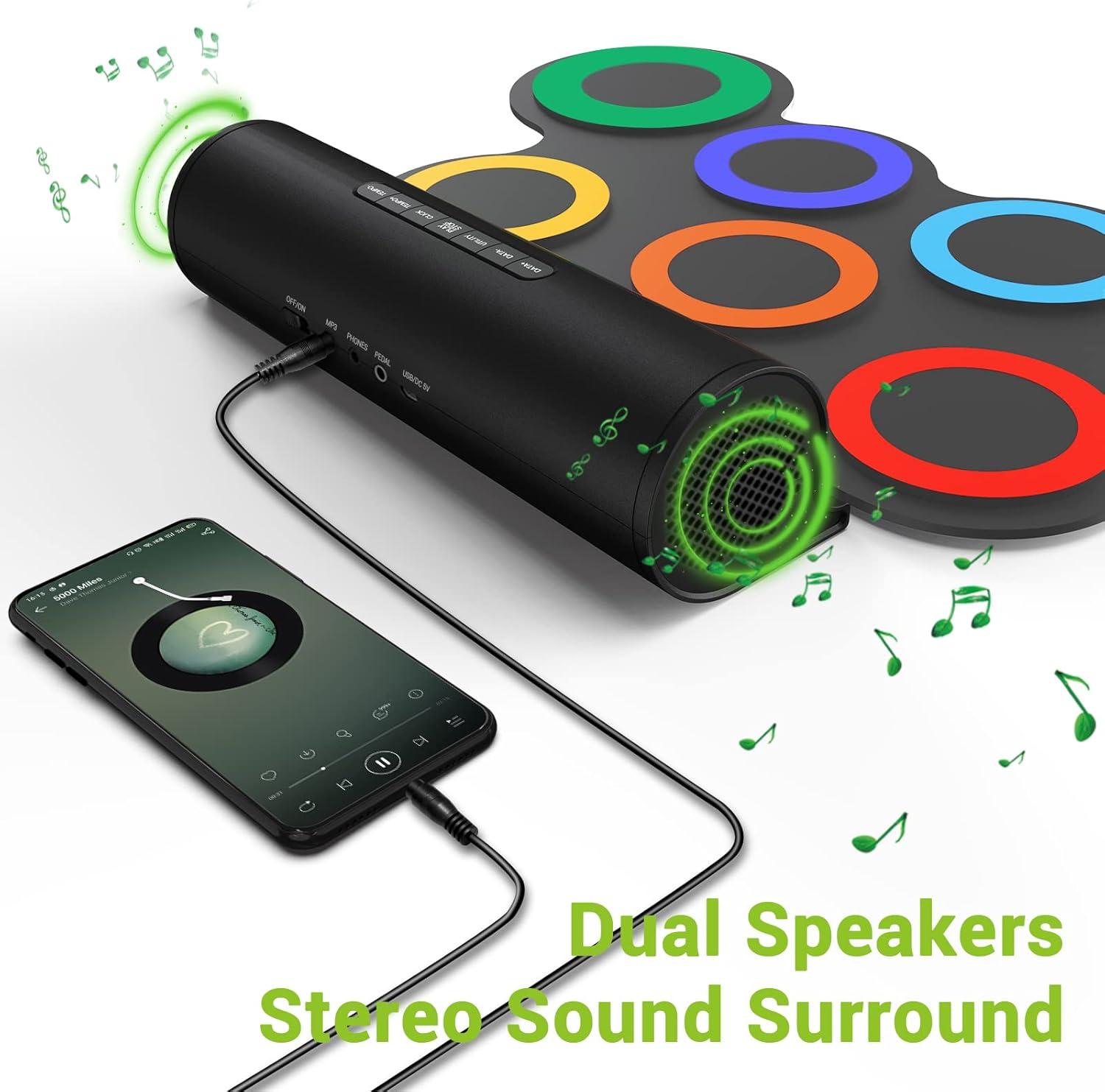
We promptly appreciated how this compact 7-pad kit matches our on-the-go practice needs: the built-in 2000mAh rechargeable battery gives up to 10 hours of playtime, so we can rehearse outdoors or take the set to gigs without hunting for outlets. The combination of high-quality dual speakers and an earphone jack means we can switch between a room-filling sound and silent, focused practice late at night.For hands-on details, the set includes 1 snare, 3 toms, 1 crash, 1 ride, 1 hi-hat and 2 foot pedals, plus 5 timbres, 8 demo songs and 3 rhythms - everything we need for varied styles and quick warm-ups. Highlights that mattered to us:
- Portability: roll-up design fits into backpacks for mobile practice.
- Quiet practice: headphone support makes late-night sessions viable.
- Realism: foot pedals and adjustable volume (10 levels) provide a convincing drumming feel.
On the production and performance side, the MIDI (5‑pin) and USB MIDI outputs let us connect to computers or phones (adapter required) to record, produce tracks, or play rhythm games like DTX mania – and the record/play demo feature speeds up idea capture. Below is a quick snapshot of how a few standout features directly serve our workflow and practice goals:
| Feature | Why it works for us |
|---|---|
| Rechargeable 2000mAh | All-day rehearsal without power tether |
| MIDI & USB out | Seamless integration with daws & rhythm games |
| Built-in speakers + headphones | Flexible between sharing sound and private practice |
Our Close Look at pads Module Connectivity and Build Quality That Shaped our Opinion

We inspected the pads and casing with practicality in mind and came away impressed by the balance of portability and thought-out design. The roll-up pads are lightweight yet resilient, and the included foot pedals add a convincing kick-drum feel that helps bridge the gap between practice kit and a live setup. Because the set is powered by a 2000mAh rechargeable battery offering up to 10 hours of play per charge, we found it easy to move sessions outdoors or into tight practice spaces without hunting for outlets. Connectivity options stood out during our tests – with both a standard 5‑pin MIDI out and a USB MIDI out we were able to hook the module to a computer for production or to mobile devices (an adapter is needed for some phones) and even play rhythm games like DTX Mania with barely any fuss.
On the module itself, the controls are straightforward and useful: volume adjusts across ten levels through the built-in dual speakers, or you can plug in headphones via the earphone jack for quiet, late-night practice.The kit ships with multiple timbres and rhythms (5 timbres, 8 demo songs, 3 rhythms) and supports record-and-play functionality – features we appreciated when layering ideas in a DAW. Highlights from our close look include:
- Pad layout: 1 snare, 3 toms, 1 crash, 1 ride, 1 hi-hat + 2 pedals
- Sound options: 5 timbres, 8 demo songs, 3 rhythms
- Connectivity: USB MIDI + 5‑pin MIDI for production and gaming
| Feature | Why it mattered to us |
|---|---|
| Battery life | Up to 10 hours – great for mobile practice |
| Headphone jack | Quiet practice without disturbing others |
See current price and availability on Amazon
Our Detailed Insights and Clear Recommendations for Practice Setup Performance and upgrades
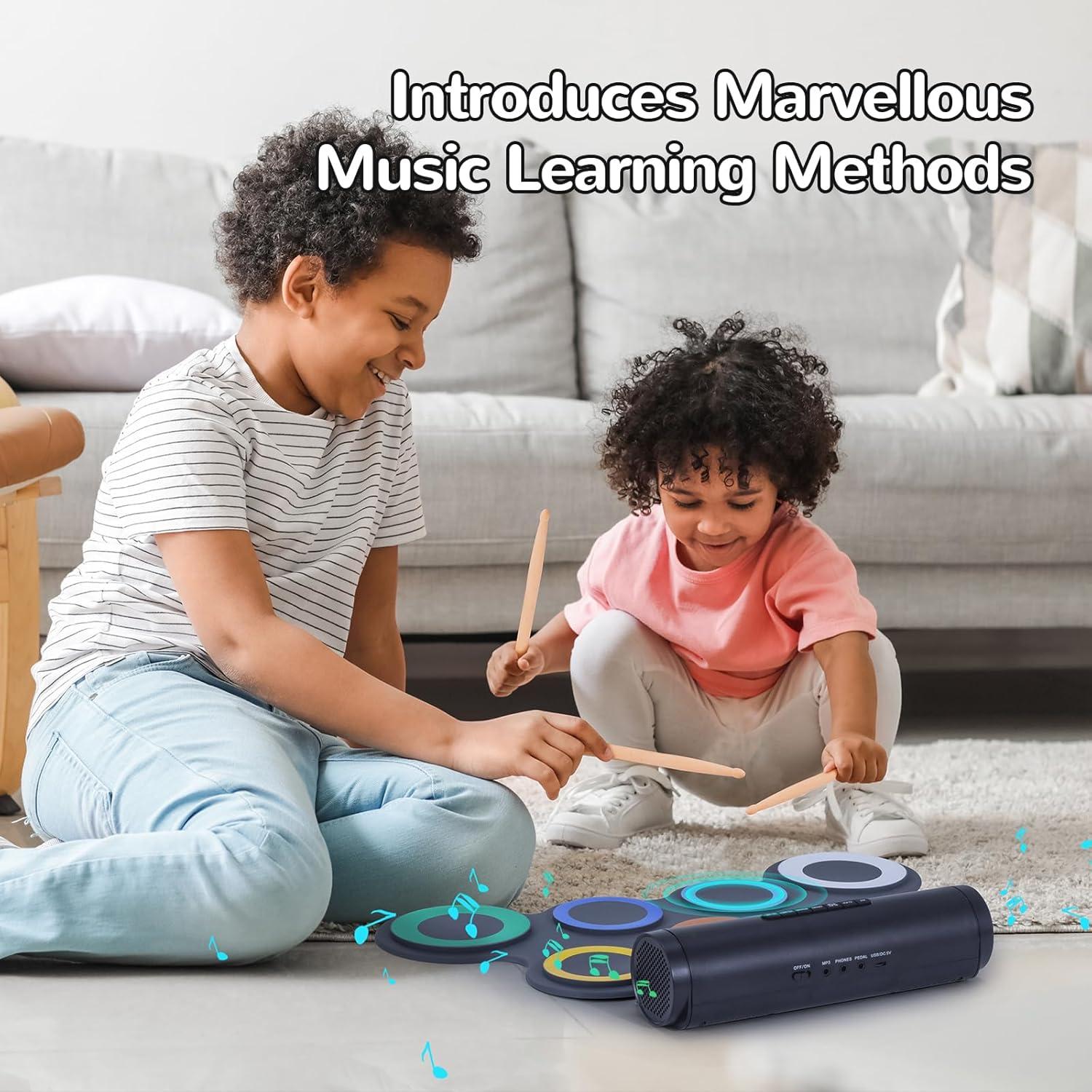
We found the kit ideal for compact practice rigs: its built‑in 2000mAh rechargeable battery delivers up to 10 hours of play per charge, so we can rehearse outdoors or move between rooms without hunting for outlets. The combination of a dedicated earphone jack and dual built‑in speakers gives us flexible volume control – from whisper‑quiet late‑night practice to fuller tone with up to 10 volume settings. For realistic feel during practice, the two foot pedals and the 7‑pad layout (snare, three toms, crash, ride, hi‑hat) cover the essentials, plus five timbres, eight demo songs and three rhythms keep our warmups varied.Our quick setup checklist for efficient practice:
- Headphones for silent focus and crisp monitoring.
- Compact stand or mat to stabilize the roll‑up pads outdoors.
- One charger dedicated to the battery so we never cut a session short.
For performance and upgrades we recommend exploiting the MIDI out (5‑pin) and USB‑MIDI connectivity to integrate with DAWs, sample libraries or rhythm games like DTX Mania - an inexpensive audio interface or adapter expands our production options and lets us record demo takes directly. The unit’s record/play feature is handy for tracking progress, but when we want fuller stage presence we pair it with larger powered monitors or a small PA. Below is a quick feature/benefit snapshot to guide upgrade choices:
| Feature | Benefit |
|---|---|
| battery (2000mAh) | Up to 10 hrs, portable practice |
| 7 Pads + 2 Pedals | Realistic kit layout |
| MIDI & USB Out | Connect to DAW/games |
Pair the kit with quality headphones and a simple audio interface to get the most from both practice and production workflows. Ready to upgrade your practice setup? Explore this kit on Amazon
Pros & Cons
Pros & Cons
We put the PAXCESS 1 through its paces and came away with a clear picture: it’s a clever,travel-ready practice tool with a few trade-offs. Below are the highlights and our main reservations.
What we liked
- Truly portable: Lightweight roll-up design and a built-in 2000mAh battery – up to ~10 hours of play – make it easy to take anywhere.
- Quiet practice options: Headphone jack for late-night sessions, plus built-in speakers when you want to be heard.
- Useful for production & gaming: USB MIDI and 5‑pin MIDI out let us connect to a computer for DAWs or rhythm games like DTX Mania.
- Complete mini kit: 7 pads (snare, toms, crash, ride, hi-hat) + 2 foot pedals give a realistic layout for basic kit practice.
- Simple sound variety: 5 timbres, 8 demo songs and 3 rhythms provide instant practice backing tracks.
- Adjustable volume: Ten volume levels and dual speakers provide surprisingly usable sound without extra gear.
What gave us pause
- Play feel: Roll-up pads can’t match the rebound and dynamics of acoustic drums or high-end electronic kits.
- Limited sound depth: Only five timbres and basic onboard sounds – serious studio work requires external VSTs via MIDI.
- Phone connection caveat: Some phones need an adapter to connect – not fully plug-and-play for every device.
- Durability questions: flexible pads and foldable construction are great for portability but may wear faster under heavy gigging.
- Not for pro-level drumming: Advanced players may miss nuanced velocity response and mesh-head realism.
| Quick Take | When to pick it |
|---|---|
| Portable practice kit with MIDI capabilities | Travel, kids, beginners, and bedroom producers |
| Battery-powered + speakers + headphones | Outdoor practice or late-night sessions |
| Affordable, simple sound set | Not ideal for pro-stage or high-detail studio work |
We see the PAXCESS 1 as a smart, fun, and very portable practice lab – excellent for learning, travel, and creative sketching – with predictable compromises in feel and sonic variety compared with higher-end electronic kits.
Q&A
Q: What exactly is the PAXCESS 1 Drum kit?
A: It’s a roll-up, 7-pad electronic practice kit with built-in speakers and a rechargeable battery. The pads cover 1 snare, 3 toms, 1 crash, 1 ride, 1 hi-hat and it includes two foot pedals that trigger bass-drum sounds.It ships with multiple timbres, demo songs and rhythms so you can start playing right away.
Q: How portable is it - can we really take it anywhere?
A: Yes. That’s the kit’s whole vibe. The roll-up mat and internal 2000mAh battery (up to ~10 hours per charge, per the specs) make it easy to pack in a bag and play outdoors, at a friend’s place, or in a small practice room. It’s intended for convenience and travel rather than heavy-duty stage use.
Q: How long does the battery last and can we play while charging?
A: The listed run time is up to 10 hours per charge, which is excellent for practice sessions. Many users can play while the unit is charging, but implementations vary – we recommend testing it the first time you plug it in or checking the manual to confirm safe use while charging.
Q: Can we use headphones? Is it quiet enough for late-night practice?
A: Yes – there’s a headphone jack. Plug in a pair of headphones and you can practice silently while keeping full sound and dynamics. This is one of the kit’s strongest features for apartment or late-night practice.
Q: Does it have built-in sound or do we always need external speakers?
A: It has built-in dual speakers with adjustable volume (up to 10 levels) and decent bass enhancement,so you don’t need external speakers for casual practice. For recording or louder performance you’d likely want to route it through a computer/audio interface or external monitors.
Q: How do we connect it to a computer, phone, or music software?
A: The kit offers both a USB-MIDI output and a standard 5‑pin MIDI OUT jack. For computers you can plug in via USB and use it as a MIDI controller in DAWs (Ableton, GarageBand, Logic, etc.). For phones, you’ll need an appropriate OTG/adapter – e.g., a USB-C OTG cable for many android phones or a Lightning-to-USB camera adapter for older iPhones (or USB-C adapter for newer iPhones/iPads that use USB-C). Once connected, configure your DAW or drum game to accept the kit’s MIDI signals.
Q: Will this work with rhythm games like DTX Mania?
A: Yes. The kit’s USB/ MIDI outputs let you map triggers in rhythm games. Expect to spend a bit of time mapping pads and calibrating sensitivity/latency for the smoothest experience. Performance will also depend on your computer/phone hardware and drivers.
Q: How realistic does it feel compared to an acoustic or higher-end electronic kit?
A: It’s a portable practice pad system, not a full professional mesh-head/stick-and-stand kit. the pads are optimized for convenience and quiet practice; feel and rebound won’t match acoustic drums or high‑end V‑drums. For groove practice, timing, rudiments and fun creative work it’s great – but drummers seeking full dynamics and realistic cymbal response should temper expectations.
Q: Is the kit velocity-sensitive and can we change sounds?
A: The kit offers multiple timbres (5 timbres listed) and demo songs/rhythms. Manufacturer specs suggest play dynamics suitable for practice, and MIDI output gives you the option to trigger different virtual drum sounds in software. The level of velocity sensitivity is typical for portable roll-up kits – useful, but not as nuanced as professional triggers.
Q: What accessories do we need?
A: Essentials: headphones, a USB cable (usually included, but check), and – if you plan to use a phone – the correct OTG/adapter for your device. If you’ll play a lot, consider a small padded case for transport and a stable surface or portable drum throne for comfort. For serious recording, a USB audio interface or a computer with low-latency drivers will help.
Q: Is it kid-friendly / durable?
A: The kit is marketed as portable and family-friendly - kids can easily pack it in backpacks and practice anywhere. The roll-up design is resilient for travel and casual use, but it’s still an electronics product: avoid heavy folding, moisture, and rough handling. For very young children, supervision is recommended.
Q: Any setup or maintenance tips?
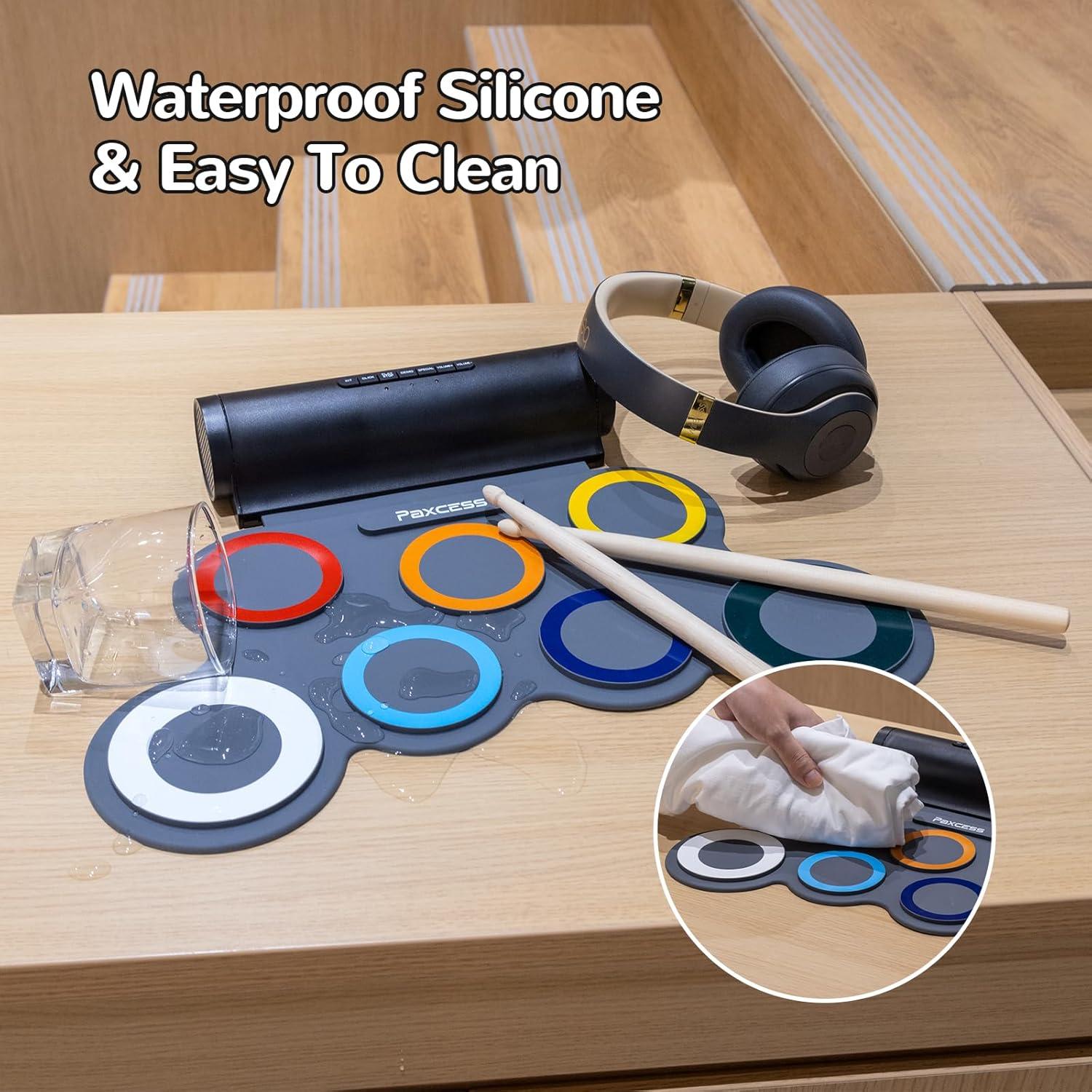
A: Unroll on a flat, dry surface; keep pedals on a non-slip mat; use headphones for silent practice; charge fully before extended use; and store it rolled (not crimped) in a protective bag. Wipe the pads with a dry or slightly damp cloth – avoid harsh cleaners.
Q: What about support, warranty, and troubleshooting?
A: Warranty details vary by seller/region – check the retailer or Paxcess support pages for specifics. For common issues (no sound, MIDI not recognized) try checking cable connections, selecting the kit as the MIDI input in your software, updating drivers, and testing on another device. If problems persist, contact Paxcess support.
Q: Who is this drum kit best for?
A: We see it as ideal for beginners, hobbyists, commuters, and anyone wanting a lightweight practice solution or travel kit. It’s also useful as an inexpensive MIDI controller for producers who want a portable way to trigger virtual drums or play drum games. If you need a professional performance kit or the most realistic feel, consider higher-end electronics.
Q: Final take – should we buy it?
A: If portability, battery-powered practice, headphone-friendly quiet sessions, and basic MIDI connectivity are your priorities, this kit delivers excellent value. If you want studio-grade feel or stage-ready dynamics,you’ll outgrow it. As a “portable beat lab,” it’s a lot of fun and a practical practice tool for many of us.
Ignite Your Passion
We’ve taken the PAXCESS 1 through quiet late‑night practice sessions, backyard jam experiments, and a few tentative forays into MIDI production - and it earned its keep as a genuinely portable beat lab. The seven responsive pads, dual pedals, and built‑in speakers make it feel more complete than most roll‑up kits, while the 2000mAh battery and headphone jack free us to play where and when we want without upsetting the neighbors.
If we need to go from silent precision (via headphones) to fill‑friendly projection (via the speakers), the switch is seamless, and the MIDI/USB outs open a clear path to recording or rhythm games. For beginners and travelers especially, the compact form and multiple timbres/demos make learning and experimenting easy and fun.
Ultimately, this is a practical, travel‑ready option for anyone looking to practice, sketch beats, or plug into a DAW without hauling a full kit. If you want a lightweight kit that balances portability with useful features, it’s worth a closer look.
ready to make beats anywhere? Buy the PAXCESS 1 Electronic Drum Set on Amazon
Reviews
There are no reviews yet.